
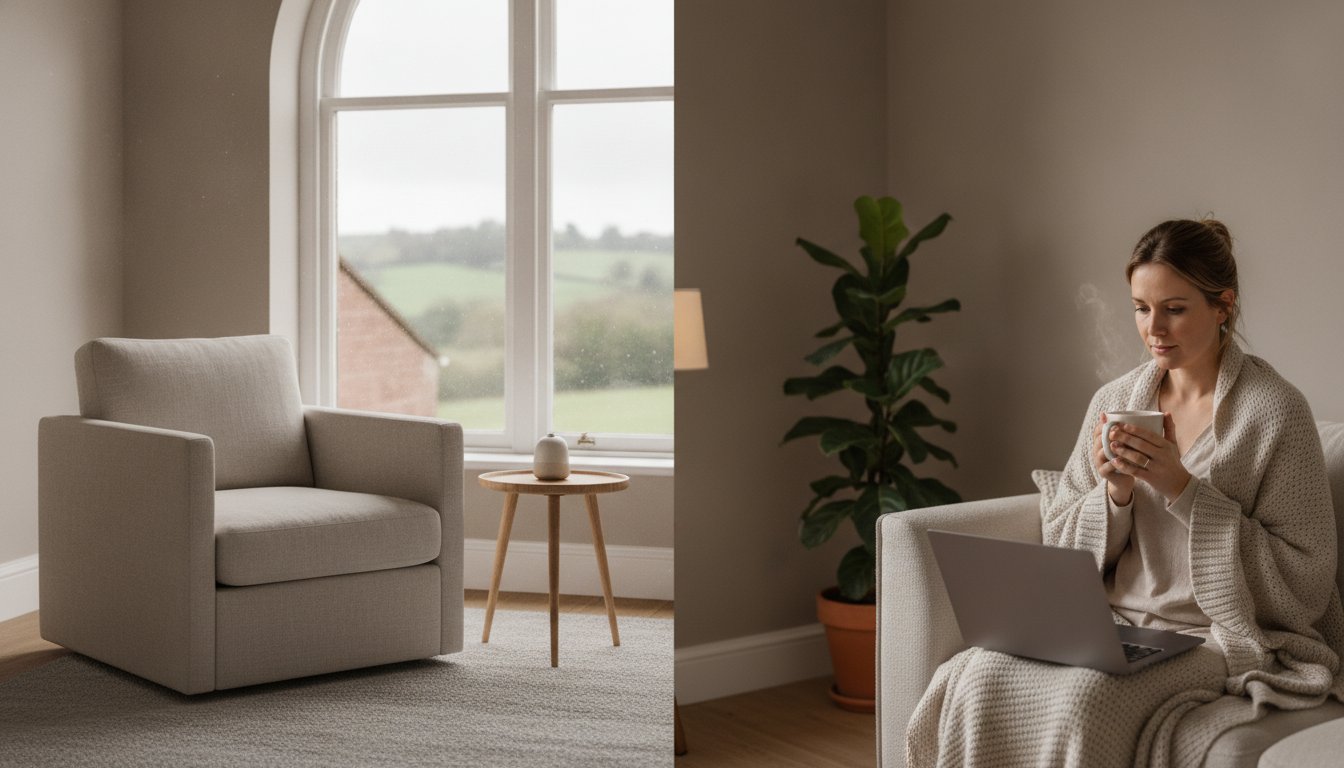
Can a digital screen ever truly hold the weight of a human heart, or is the physical presence of another person the only way to feel truly seen? It’s a question many of us ask when weighing the choice between online therapy vs in person support. You might feel a sense of hesitation, wondering if technology creates a barrier to the deep, soul-level connection you need. Perhaps you worry about the lack of privacy at home, or find that the anxiety of travelling to a physical centre feels like an insurmountable hurdle. We understand. These feelings are a natural part of seeking a sanctuary where you can finally feel safe.
This guide will help you navigate the nuanced differences between remote and face-to-face sessions, ensuring you find a format that fits your lifestyle without sacrificing clinical depth. We will look at how research validates both paths, whilst exploring how to cultivate a genuine sense of rapport. By the end, you will feel empowered to choose the environment that allows you to breathe, speak, and evolve at your own pace. Your path to recovery should feel like a partnership, not a compromise.
Key Takeaways
- Explore the unique ‘felt sense’ of a traditional therapeutic alliance and how it compares to the modern accessibility of a secure video-based encounter.
- Learn how evidence-based frameworks like CBT and ACT are tailored to ensure clinical effectiveness across both digital and physical environments.
- Weigh the practical benefits of online therapy vs in person care, from managing travel-related anxiety to creating a dedicated sanctuary for healing within your own home.
- Discover why the quality of the rapport and your personal sense of safety are more vital to your long-term progress than the physical space itself.
- Understand how to navigate the specific challenges of somatic work and emotion regulation whilst maintaining a deep, transformative connection with your therapist.
Choosing Your Therapeutic Environment: The Online vs In-Person Dilemma
Choosing between online therapy vs in person support isn’t just a logistical tick-box exercise. It’s a deeply personal decision that carries significant emotional weight, especially if you’re already struggling with anxiety or the aftermath of trauma. You might find yourself wondering if a screen can truly facilitate healing, or conversely, if the thought of leaving your home to sit in a new, unfamiliar room feels too exposed. It’s okay to feel conflicted. Effectiveness isn’t a fixed metric; it’s entirely subjective to your current capacity, your environment, and where you feel most able to lower your guard.
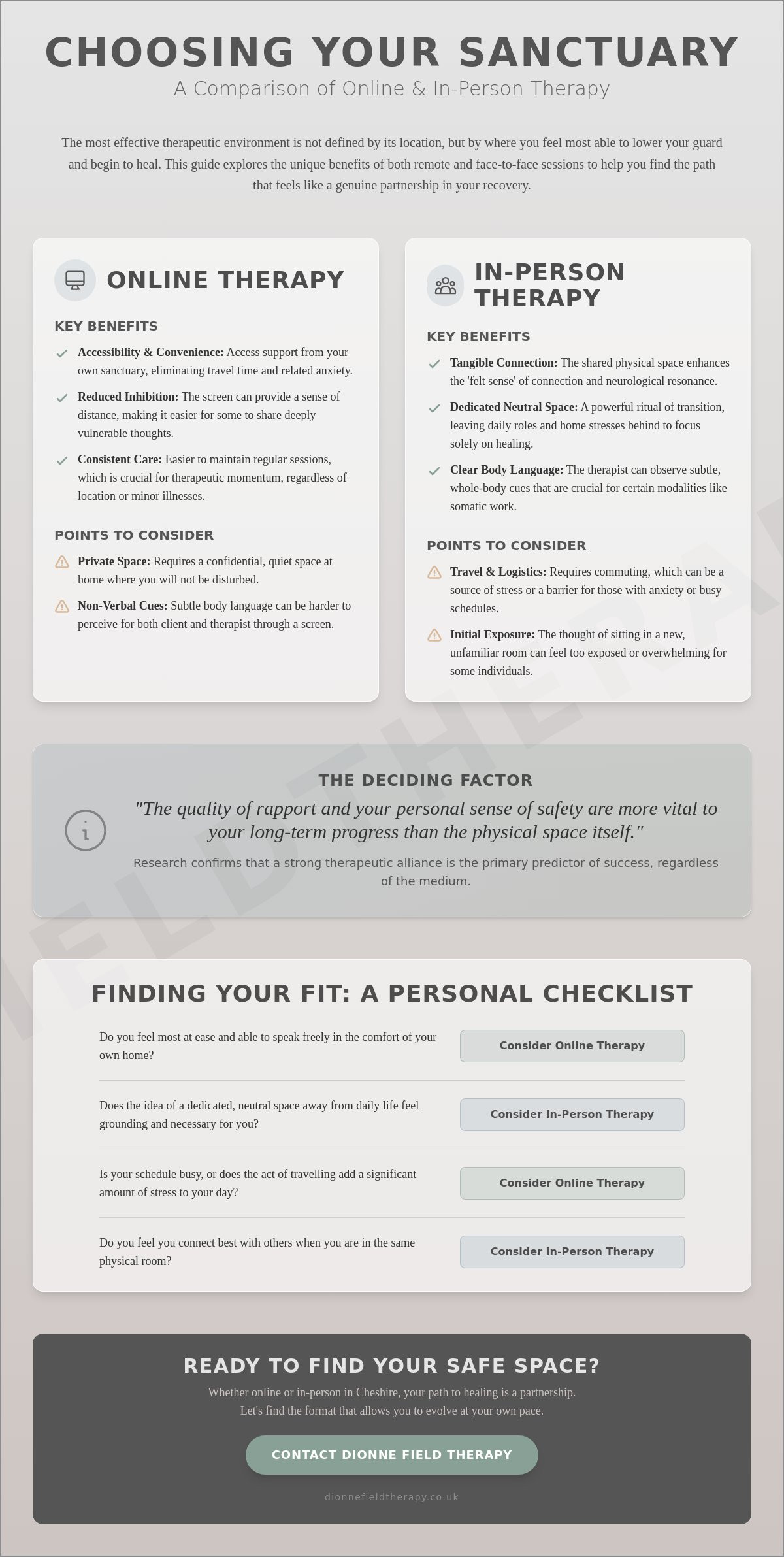
Online therapy is a secure, video-based professional encounter that brings the therapeutic space into your own sanctuary, offering a bridge for those who might otherwise struggle to access help. In-person therapy remains the traditional, room-based therapeutic alliance, where the shared physical environment and the therapist’s presence become a grounding container for the work. Neither is inherently superior; they are simply different ways of holding space for your evolution. The goal is to find the setting that feels like a safe harbour for your specific needs.
The Shift Towards Flexible Mental Health Care
Since 2020, the British therapeutic landscape has undergone a profound evolution. What was once seen as an alternative is now a mainstay. BACP-accredited therapists have worked diligently to ensure that the rigorous ethical standards and clinical boundaries of the profession are upheld, whether you’re sitting on a sofa in Cheshire or in a dedicated consulting room. This shift has prioritised your agency and comfort. Ultimately, the “right” choice is the one that allows you to show up consistently. If a long commute or the fear of public spaces adds to your distress, the quiet convenience of a remote session might be the very thing that makes recovery possible.
Breaking the Myth of the ‘Second-Class’ Session
There is a lingering misconception that remote support is somehow “therapy-lite.” However, current research into digital interventions suggests a clear non-inferiority of online CBT for anxiety when compared to face-to-face sessions. For a comprehensive overview of online therapy, one can see how the history of remote support has matured into a sophisticated, evidence-based practice. The quality of the work doesn’t depend on the upholstery of the chair, but on the strength of the connection. In 2026, therapeutic rapport stands as the primary predictor of success, regardless of whether you are meeting in the flesh or through a lens.
Comparing the Benefits: Convenience, Connection, and Clinical Effectiveness
When you sit in a dedicated therapy room in Sandbach, there is a distinct ‘felt sense’ that occurs. It is the subtle, grounding awareness of being in a space designed specifically for your healing. This physical presence allows for a unique neurological resonance; our brains are naturally wired to pick up on the micro-expressions and shared energy of being in the same room. For many, this tangible connection forms the very foundation of trust. However, the choice between online therapy vs in person care often hinges on more than just proximity. It’s about where your nervous system feels most at ease.
Some individuals experience what psychologists call the ‘online disinhibition effect’. This phenomenon suggests that the slight distance provided by a screen can actually make it easier to share deeply vulnerable thoughts that might feel too intense in the flesh. For a busy professional, the time saved by avoiding a commute isn’t just about convenience; it’s about reducing the friction of seeking help. Extensive research on the effectiveness of online therapy confirms that these remote sessions can be just as transformative as traditional formats, provided the clinical bond remains the priority.
The Case for In-Person Therapy in Cheshire
Stepping out of your front door and into a neutral, quiet centre can be a powerful ritual of transition. It signals to your mind that you are entering a space where your daily roles and chaotic home lives don’t follow you. In a physical room, a therapist can observe subtle body language cues, such as a slight shift in posture or a restless foot, which might be lost on camera. These details often hold the key to unspoken emotions. If you feel that physical presence is vital for your journey, exploring face-to-face therapy options in Cheshire may provide the steady container you need.
The Advantages of Secure Online Therapy
- Removing Commute Anxiety: For those navigating social phobia or agoraphobia, the journey to a clinic can feel like a mountain. Online sessions remove this barrier, allowing the work to begin from a place of relative calm.
- The Comfort of the Familiar: There is a profound sense of safety in being in your favourite chair, perhaps with a pet nearby or a cup of tea in your own mug, whilst navigating difficult memories.
- Greater Accessibility: Residents in rural parts of Cheshire or those with physical mobility challenges no longer have to worry about the logistics of travel, making professional support truly inclusive.
How Different Therapies Adapt: Somatic, CBT, and ACT Approaches
The effectiveness of your journey often depends on how a specific therapeutic framework adapts to your chosen environment. Whether you are navigating the structured path of Cognitive Behavioural Therapy (CBT) or the body-led explorations of somatic work, the delivery method matters. When comparing online therapy vs in person sessions, it’s helpful to see how these modalities shift to maintain their clinical integrity. A trauma-informed therapist ensures that your safety remains the priority, regardless of the physical distance between you. Every framework has its own way of bridging the gap to meet you exactly where you are.
Somatic Therapy: Feeling Safe in Your Body, Anywhere
It’s a common misconception that somatic therapy requires physical proximity. Whilst sitting in the same room allows for a shared energetic field, a skilled practitioner can guide you through body-based grounding exercises just as effectively via a secure video link. We focus on co-regulation through the rhythm of the voice and intentional presence. You might learn self-touch techniques or postural shifts that help settle your nervous system in real-time. This is a vital component of healing trauma informed therapy, as it empowers you to find safety within your own skin, in your own home. By noticing the subtle sensations in your body during a remote call, you build a portable toolkit for regulation that exists beyond the therapist’s office.
ACT and CBT: Structured Tools for Anxiety
For more cognitive-focused approaches like CBT and Acceptance and Commitment Therapy (ACT), the digital world offers unique advantages. Screen-sharing allows us to work through the ACT matrix or thought records together, making the process collaborative and visual. Many find that completing ‘homework’ or reflective exercises on the same computer they use for sessions helps integrate these new skills into their daily lives more naturally. The transition feels less like a separate event and more like a functional part of their routine.
Throughout these intense digital sessions, we remain deeply mindful of your ‘Window of Tolerance’. We won’t push into overwhelming territory without the proper grounding tools in place. Metaphors are the heartbeat of ACT; whether we are discussing the ‘passengers on the bus’ in a quiet Cheshire office or via a laptop, the emotional resonance remains the same. The choice of online therapy vs in person care shouldn’t limit your access to these evidence-based tools. Instead, it simply changes the lens through which we view your progress, ensuring the work remains both rigorous and deeply compassionate. If you’d like to explore how structured virtual sessions work in practice, our guide to online CBT for anxiety offers a compassionate, in-depth look at what this process can feel like.
Practical Considerations for Your Decision: Privacy, Travel, and Emotional Safety
The single most common objection we hear regarding remote support is a simple, logistical one: “I don’t have a private space at home.” It is a valid concern. When your living room is also your office and your sanctuary, finding a corner where you won’t be overheard by a partner or children can feel impossible. This physical constraint often tips the scales in the debate of online therapy vs in person care. If your home environment feels ‘porous’ or crowded, the neutral walls of a professional consulting room become more than just a convenience; they become a necessity for your emotional safety.
The Importance of the ‘Commute’ for Processing
There is a hidden psychological value in the physical journey. The drive to or from Tarporley or Middlewich acts as a mental ‘buffer’ zone. It allows you to decompress and shift gears before and after a session. Closing a laptop and immediately returning to family life can feel jarring, whereas a twenty-minute drive through the Cheshire countryside provides a vital re-entry period. This transition helps prevent ‘Zoom fatigue’, which is particularly prevalent for those who already spend their working day in digital meetings. For those who find that a clear physical boundary is essential for their mental wellness, exploring face to face therapy Cheshire can provide that much-needed separation.
Ensuring Privacy and Security Online
When weighing online therapy vs in person options, we look for digital platforms that are fully GDPR compliant and feature end-to-end encryption. Your words must stay between us. However, creating a ‘digital sanctuary’ at your end is equally important. We view the ‘safe container’ of therapy as a shared responsibility between therapist and client; I provide the clinical holding, and you prepare the physical space. If you are ready to begin this process, you can book an introductory session to discuss your specific needs.
To help you feel secure at home, consider these practical steps:
- Use Headphones: This ensures the therapist’s voice isn’t heard by others and helps you feel more immersed in the dialogue.
- White Noise: Placing a fan or a small white noise machine outside your door can mask your voice for those in the next room.
- Visual Boundaries: A simple ‘do not disturb’ sign or a locked door can provide the psychological permission you need to speak freely.
- Post-Session Ritual: Spend five minutes making a cup of tea or stepping into the garden after you log off to mimic the ‘commute’ buffer.
Finding Your Safe Space with Dionne Field Therapy in Cheshire
At Dionne Field Therapy, we believe that the environment you choose should be a reflection of your own internal compass. Whether we meet in person or across a digital divide, my approach remains rooted in a profound sense of empathy and professional reassurance. Your recovery isn’t a one-size-fits-all process. It’s a living, breathing evolution that requires a delicate balance of clinical authority and human compassion. By tailoring every session to your unique needs, I help adults navigate the complexities of anxiety and personal challenges in a way that respects their individual boundaries. We understand that the decision between online therapy vs in person care can feel heavy, but it’s a choice that remains entirely in your hands.
I recognise the immense courage it takes to acknowledge your struggles and reach out for individual counselling Cheshire. It is a significant step toward reclaiming your sense of self. My practice offers the flexibility to switch between formats as your circumstances or comfort levels shift. Perhaps you’ll start with online sessions whilst you build rapport, then transition to our Sandbach centre when you feel ready for a physical change. Your path is yours to navigate. A steady hand. A quiet space. I’m simply here to provide the grounding influence you need to do so safely.
A Trauma-Informed Choice
A truly trauma-informed approach prioritises your nervous system’s response above all else. If the thought of a commute causes your heart to race, or if a screen feels like a barrier to your healing, we listen to those signals. My BACP-accredited support in Sandbach and the surrounding Cheshire areas is designed to lower your defences and build immediate emotional trust. Your intuition is often the best guide for choosing your therapeutic space. When you listen to that quiet inner voice, you find the environment where you feel most able to breathe and evolve.
Taking the Next Step Toward Wellness
As you reflect on the differences between online therapy vs in person support, ask yourself: where do I feel most like ‘myself’? Where do I feel the most permission to be vulnerable? If you’d like to learn more about my background and philosophical approach, I invite you to view Dionne’s profile on Psychology Today. This might help you feel a deeper sense of being understood before we even meet.
When you’re ready, I encourage you to book an initial enquiry. This is a gentle, no-pressure space to discuss your preferences and see how we might work together. Whether we sit in a shared room or connect through a lens, your journey toward a state of structured, calm support begins with a single, brave conversation. You don’t have to carry the weight of your recovery alone.
Choosing the Path That Honours Your Healing
Ultimately, the decision between online therapy vs in person support isn’t about following a rigid rule. It’s about listening to your own nervous system and identifying the space where you feel most at ease to speak your truth. Whether you find that sanctuary in the quiet walls of a Cheshire consulting room or within the familiar comfort of your own home, the depth of the work remains the same. The most vital element is the quality of the connection we build together; a partnership rooted in trust and mutual respect.
As a BACP-accredited therapist and trauma-informed specialist, I am here to offer flexible local support that adapts to your life. You don’t have to navigate these choices alone. If you feel ready to explore which environment suits your current needs, I invite you to begin your journey with a compassionate enquiry at Dionne Field Therapy. Your recovery is a personal evolution, and it deserves a setting that feels entirely safe for you. Take a breath; the right path is the one that brings you closer to yourself.
Frequently Asked Questions
Is online therapy as effective as in-person for severe anxiety?
Research consistently shows that online therapy is as effective as in-person support for managing anxiety. For many, the ability to start sessions from a place of existing safety, such as their own home, can lower the initial barriers to engagement. A 2024 study published in Nature Mental Health confirmed that online CBT for anxiety is both clinically effective and cost-efficient, providing a reliable path to recovery for those who find travel distressing.
What equipment do I need for a secure online therapy session?
You simply need a reliable device with a camera and microphone, such as a laptop, tablet, or smartphone. A stable internet connection is essential for maintaining the unhurried cadence of our conversation. We also recommend using headphones to enhance audio clarity and ensure that our dialogue remains entirely private within your chosen space. This simple setup allows us to focus fully on your internal experience without technical distractions.
Can I do a mix of both online and in-person sessions?
Yes, we offer a flexible approach that allows you to move between formats as your circumstances or comfort levels change. You might prefer the grounding presence of a face-to-face session in Sandbach one week, but require the convenience of a remote call the next. This hybrid model ensures that your support remains a consistent, steady influence in your life, regardless of your schedule or fluctuating energy levels.
Is online therapy cheaper than visiting a therapist in Sandbach?
In the wider UK market, remote sessions are often more affordable because they reduce the overhead costs associated with maintaining a physical consulting room. However, the true saving often comes from the significant reduction in travel time and transport costs. When weighing online therapy vs in person options, it’s helpful to consider the total investment of your time and emotional energy alongside the session fee itself.
What happens if the internet connection fails during a session?
We always establish a clear backup plan during our very first meeting to ensure you feel secure. If the video connection becomes unstable, we typically transition immediately to a telephone session so that your support isn’t interrupted. This safety net allows us to maintain the therapeutic container and finish our work together without the unnecessary stress of technical delays, keeping your nervous system calm and supported.
How do I know if I’ll feel ‘connected’ to my therapist through a screen?
Genuine rapport is built through active listening, empathy, and shared understanding, all of which transcend the physical medium. Whilst the ‘felt sense’ of being in the same room is unique, many clients find that the focused, one-on-one nature of a video call creates a profound sense of intimacy. We prioritise building a secure emotional bond from the first moment, ensuring you feel seen and heard regardless of the lens.
Is my privacy guaranteed during a remote therapy session in the UK?
Your privacy is our utmost priority and is protected by strict ethical and legal standards. We use secure, encrypted platforms that comply with UK GDPR regulations to ensure that our sessions remain entirely confidential. Whilst I provide a secure environment at my end, we also work together to help you establish a private, undisturbed sanctuary within your own home, ensuring your online therapy vs in person choice feels equally safe.
Can somatic therapy techniques really be done over a video call?
Somatic techniques are highly adaptable to a remote setting and can be deeply transformative. I guide you through body-based grounding and regulation exercises by using gentle verbal cues and modelling movements on screen. This process empowers you to notice and settle your own nervous system responses in the very environment where you live, making the skills feel deeply practical and integrated into your daily life.

Article by
Dionne Field
Dionne Field is an integrative psychotherapist. She's passionate about helping clients understand themselves with greater compassion and clarity. With experience in both NHS mental health services & private practice, her work combines trauma-informed, person-centred therapy, ACT, CBT, DBT, 'parts work' & somatic therapy. Dionne believes that meaningful change happens when people feel safe, understood and empowered to reconnect with who they truly are.
Disclaimer
The information provided in this blog is intended for educational and informational purposes only and should not be considered a substitute for professional mental health advice, diagnosis, or treatment. Whilst every effort is made to ensure the information shared is accurate and up to date, the content reflects general therapeutic knowledge and perspectives and may not be applicable to your individual circumstances. Reading this blog does not create a therapeutic relationship between you and Dionne Field Therapy. If you are currently experiencing emotional distress, mental health difficulties, or require support specific to your situation, please seek advice from a qualified healthcare professional or mental health practitioner. If you are in crisis, experiencing thoughts of self-harm, or feel unable to keep yourself safe, please contact your GP, NHS 111, emergency services, or an appropriate crisis support service immediately. Any external links provided are for convenience and informational purposes only. Dionne Field Therapy is not responsible for the content, accuracy, or availability of third-party websites. By using this website and blog, you acknowledge and accept this disclaimer.
Leave a Reply