

What if the screen that connects us to the world is actually the very thing preventing you from feeling truly heard? While digital convenience has its place, many people find that navigating high-intensity emotions through a monitor feels distant or even isolating. If you’ve been searching for face to face therapy Cheshire, you likely sense that something vital is found in the physical presence of another person. There’s a unique, grounding safety in a shared room; a quiet reassurance that comes when a therapist can sense your subtle shifts in breath or posture, helping you feel anchored when anxiety feels like it might pull you under.
It’s understandable to feel overwhelmed by endless directories or the fear that a professional won’t truly grasp the weight of your trauma. You deserve a space where your story is held with the care it requires. This article explores the specific benefits of in-person psychotherapy and how to find a practitioner who understands the local Cheshire context. You’ll learn how to identify the right support for your anxiety or trauma recovery, ensuring you gain practical tools and a genuine sense of being understood. Your path to wellness shouldn’t be a journey you take alone.
Key Takeaways
- Understand the current landscape of mental health support and why private face to face therapy Cheshire offers a vital alternative to lengthy waiting lists.
- Discover the power of co-regulation and how being in the physical presence of a calm professional helps to settle a nervous system impacted by trauma.
- Learn how to evaluate your home environment to determine if you require the dedicated, sensory safety of a therapy room for your recovery journey.
- Identify the core qualities of a trauma-informed practitioner to ensure your therapist truly understands the complexities of your emotional experience.
- Explore how individual counselling in the quiet settings of Sandbach or Tarporley provides a supportive backdrop for deep, personal growth.
Navigating Therapy Options in Cheshire: Beyond the NHS Waiting List
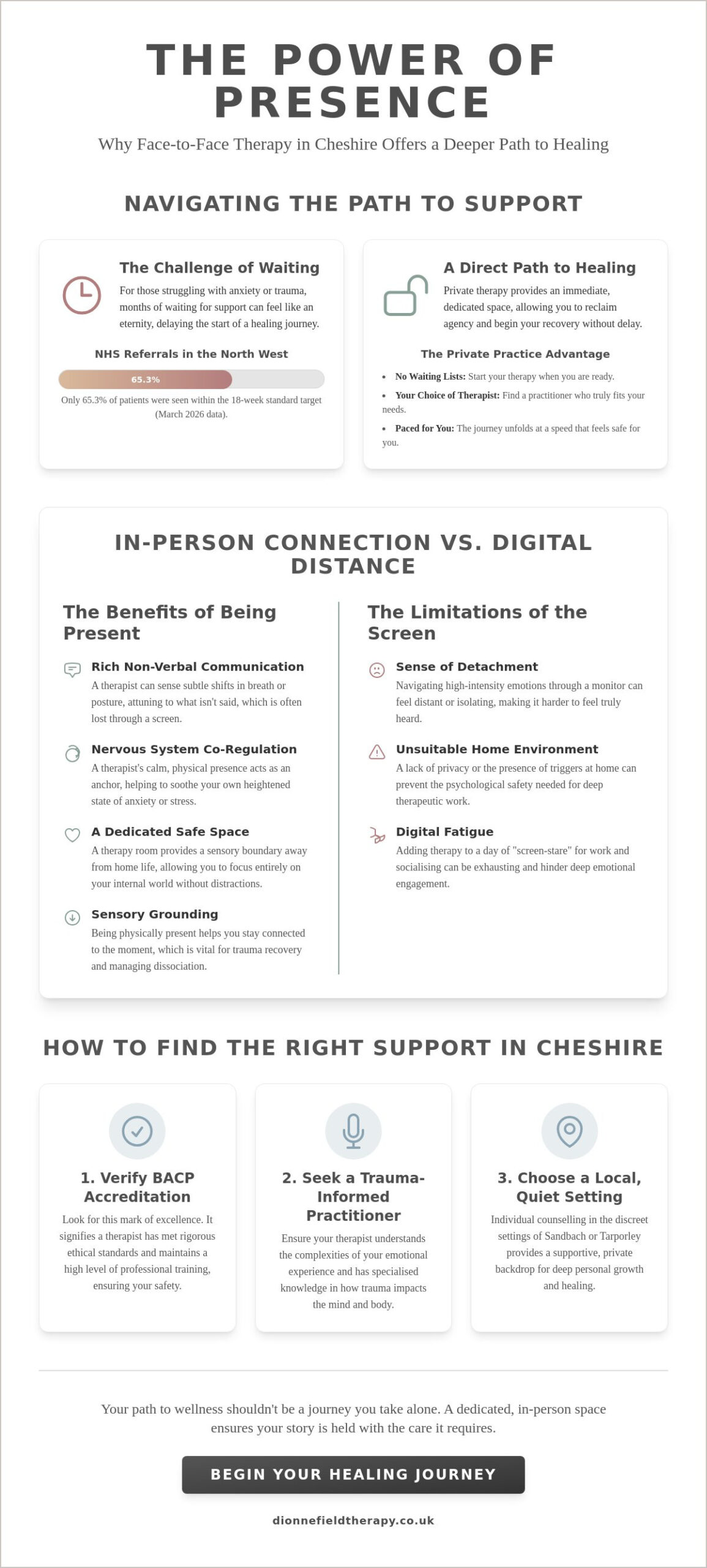
Finding the right support for your mental health can feel like a daunting task, especially when you are already feeling vulnerable. In the North West, the demand for mental health services remains high. Data from March 2026 indicates that only 65.3% of patients on NHS waiting lists were seen within the 18-week standard. For those struggling with deep-seated anxiety or the complex echoes of trauma, these months of waiting can feel like an eternity. This is perhaps why so many people are now looking toward private face to face therapy Cheshire as a way to reclaim their agency and begin their healing journey without delay.
But why choose a physical room over a digital screen? For many adults, psychological safety is deeply tied to the environment. A dedicated therapeutic space offers a sensory boundary that your home office or bedroom simply cannot provide. It is a place where the outside world stops, allowing you to focus entirely on your internal landscape. When we consider what psychotherapy is, we see it as a collaborative process of discovery. This partnership often feels more grounded and “real” when you are sharing the same physical air, noticing the subtle, calming presence of a therapist who is fully attuned to your needs. For residents in Sandbach and Tarporley, seeking local, discreet individual counselling provides a sense of privacy and community that large, faceless directories often lack.
Private Therapy vs. NHS Talking Therapies
The NHS Talking Therapies programme, formerly known as IAPT, provides a vital service, yet it often operates within rigid constraints. Many patients find their sessions are “capped” at a specific number, regardless of whether they feel ready to finish. In a private practice setting, the work evolves at your pace. You aren’t just a number on a list of 7.11 million cases; you are an individual with a unique history. Choosing your own therapist allows for a deeper level of autonomy, which research consistently shows leads to better clinical outcomes and a stronger therapeutic bond.
The Role of BACP Accreditation in Your Search
When you begin searching for face to face therapy Cheshire, the sheer volume of names can be overwhelming. How do you know who to trust? Looking for BACP (British Association for Counselling and Psychotherapy) accreditation is a vital first step. This status isn’t just a badge; it signifies that a therapist has met rigorous ethical standards and maintains a high level of professional training. You can easily verify a practitioner’s credentials on the BACP register, giving you the peace of mind that your emotional safety is being held by someone committed to the highest standards of clinical excellence and professional regulation.
The Unique Benefits of Face-to-Face Therapy for Anxiety and Trauma
When you step into a room for face to face therapy Cheshire, something subtle but profound happens within your biology. Your nervous system begins to “read” the safety of the environment and the person sitting across from you. This is co-regulation. It’s the process where a therapist’s steady, calm presence acts as an anchor for your own heightened state. Unlike a digital interface, which can feel flat or pixelated, the physical presence of another human being provides a rich tapestry of non-verbal cues. These cues signal to your brain that it’s safe to lower your guard.
Digital fatigue is a real barrier to deep emotional work. We spend our days staring at screens for work, socialising, and admin. Adding a therapy session to that “screen-stare” can lead to a sense of detachment. In a dedicated therapy room, you’re free from the blue light and the lag of a video call. You can breathe the same air, notice the natural light in the room, and feel the weight of your feet on the floor. This sensory grounding is particularly vital for those recovering from trauma, as it helps keep you present in the moment rather than drifting into a state of dissociation.
Somatic Therapy and the Nervous System
Somatic therapy is a clinical approach that acts as a bridge between the mind and the body, focusing on how emotional stress is physically stored in our tissues. In person, a therapist can observe the subtle tightening of a shoulder or a change in your breathing pattern that might be missed on a webcam. This allows for more nuanced work within your “Window of Tolerance”. This is the optimal zone where you can process difficult emotions without becoming overwhelmed or shutting down. While accessing therapy on the NHS is a common starting point, many find that the specific, body-based focus of private trauma-informed therapy provides the deeper level of regulation they need.
Creating a Sacred Space for Healing
There’s a hidden power in the “commute” to your session. Whether you’re driving through the quiet lanes of Cheshire or walking to a local practice, this travel time serves as a psychological transition. It allows you to “gear up” for the work ahead and, perhaps more importantly, “gear down” afterwards. When you leave the room, you leave the heaviest parts of your conversation there. The physical boundary of the therapy room ensures that your home remains a place of rest, not a place where you’ve just unpacked your deepest fears. This neutral, quiet setting encourages a level of self-reflection that’s often hard to find amongst the distractions of daily life.
Face-to-Face vs. Online Therapy: Which is Right for Your Journey?
Choosing between sitting on a sofa in a shared room or sitting in front of a laptop isn’t just a matter of logistics. It’s a choice about how you want to experience your own healing. While online therapy offers undeniable convenience for those with severe mobility issues or extreme time constraints, face to face therapy Cheshire provides a level of intimacy that a digital connection often struggles to match. When you’re dealing with high levels of anxiety, the last thing you need is the stress of a “frozen screen” or a dropping Wi-Fi signal. In-person sessions remove these technical barriers, allowing you to settle into the work without the distraction of “screen-stare.” If you are still weighing up your options, our detailed guide on online therapy vs in person support explores the nuanced differences between both formats to help you make a confident, informed choice.
Privacy is another vital consideration. It’s important to ask yourself: is my home truly a safe space for deep emotional work? If you’re constantly worried about a partner, child, or housemate overhearing your session, you’ll likely hold back. You won’t feel free to express the rawest parts of your experience. A neutral, private room in a professional practice ensures your home remains a sanctuary, separate from the difficult processing that happens in therapy. You can speak your truth without looking over your shoulder, knowing the space is entirely yours for that hour.
The Efficacy of CBT and ACT in Person
Frameworks like Cognitive Behavioural Therapy (CBT) and Acceptance and Commitment Therapy (ACT) often feel more dynamic when delivered in person. In a shared physical space, working through a CBT thought record or planning a behavioural experiment feels like a true partnership. You can look at the same piece of paper, noticing the therapist’s reflections in real-time. Similarly, the experiential metaphors used in ACT land with more weight when you aren’t distracted by your own reflection on a monitor. This shared focus helps the therapeutic alliance form more quickly, creating a foundation of trust that is essential for long-term recovery.
A Decision-Making Framework
Before you commit to a path, it’s helpful to reflect on your specific needs. You might consider trying a “hybrid” approach; perhaps starting in person to build that initial rapport before moving to occasional online sessions for convenience. To help you decide, ask yourself these questions:
- Do I have a space at home where I can speak freely without being overheard?
- Do I find digital communication draining or disconnecting?
- Is the “commute” to a local Cheshire practice a helpful transition for me?
- Do I feel more “seen” when I am in the physical presence of another person?
There’s no right or wrong answer. It’s about what makes you feel safest. Many people find that trialling an initial face to face session helps them understand the difference in energy and focus that a physical room provides. It’s about finding the rhythm that allows you to breathe more easily.
What to Look for in a Cheshire Private Practice: A Local Selection Guide
Searching for face to face therapy Cheshire often begins with a list of names, but finding the right fit requires looking beyond a simple biography. You are looking for a “steady companion”, someone whose professional voice resonates with your own lived experience. When you read a therapist’s profile, notice how you feel. Do their words offer a sense of safety? Do they seem to understand the nuances of your struggle without judgement? This initial gut feeling is often the first step in building a strong therapeutic alliance.
Discretion and logistics also play a vital role in your comfort. If you are seeking support in towns like Middlewich, Nantwich, or Sandbach, you might value a practice that offers easy parking and a quiet, unassuming entrance. The physical journey to your session should not add to your anxiety. During an initial consultation, don’t be afraid to ask practical questions about the space. You might ask how they handle confidentiality in a local setting or what their approach is to trauma-informed care. A truly professional practitioner will welcome these questions, as they demonstrate your commitment to finding a safe path forward.
Specialist Training: ACT, CBT, and Somatic Modalities
An integrative approach is often more effective than a single-method style because it acknowledges that you are a whole person, not a set of symptoms. A therapist trained in Cognitive Behavioural Therapy (CBT) can help you challenge intrusive thoughts, whilst Acceptance and Commitment Therapy (ACT) provides tools to move toward your values despite your pain. When these are combined with somatic (body-based) work, the healing becomes more profound. Always check that your chosen professional has specific experience in anxiety and trauma, and that they are committed to their own ongoing professional development to ensure you receive the most current, evidence-based care.
Practicalities and Pricing in Cheshire
In 2026, private therapy rates in the UK generally range from £50 to £150 per hour. In smaller Cheshire towns and rural areas, you will typically find sessions cost between £50 and £80. Whilst cost is a factor, it is helpful to view this as an investment in your long-term emotional well-being. Quality of support often outweighs the quantity of sessions. You can verify a therapist’s local presence and professional standing through trusted platforms like the Counselling Directory, which ensures you are connecting with regulated professionals.
If you are ready to take the next step toward reclaiming your peace of mind, you can book an initial session to see how a tailored, face-to-face approach can support your recovery.
Personalised Individual Counselling in Sandbach and Tarporley
Sandbach and Tarporley aren’t just charming Cheshire towns; they offer a specific kind of stillness that supports the work of personal evolution. Choosing face to face therapy Cheshire in these locations means stepping away from the rush of daily life and into an environment designed for reflection. The Dionne Field Therapy approach is built upon a foundation of profound empathy balanced with clinical rigour. It’s a space where your internal struggles are validated with sensitivity, helping you move from a state of feeling “stuck” in cycles of anxiety or the persistent echoes of past trauma toward a more regulated, grounded existence. You might feel as though your nervous system is constantly on high alert, or perhaps you’ve noticed a heavy sense of disconnection that you can’t quite shake. This practice is designed to meet you exactly where you are, offering a steady hand as you navigate these complexities.
This work is about more than just managing symptoms; it’s about a partnership. You aren’t being told what to do. Instead, you are being guided by a seasoned expert who respects your individual boundaries and your unique pace. Whether you are walking through the quiet, historic streets of Tarporley or finding a moment of calm amongst the green spaces of Sandbach before your session, the local context matters. It provides a sense of community and groundedness that can be a vital part of the healing process. These settings offer the perfect quiet backdrop, allowing you to leave the noise of the digital world behind and focus entirely on your own growth.
A Safe Space for Adults in Cheshire
My practice is dedicated exclusively to individual psychotherapy for adults. By focusing solely on adult experiences, I can provide a depth of understanding for the complex challenges of mature life, from professional burnout and relationship strain to long-standing trauma recovery. This is a non-judgemental, gentle invitation into a safe space where you can finally lower your defences and feel truly heard. There is no pressure to have all the answers. The goal is to create a steady and grounding influence that allows you to explore your internal world with curiosity rather than fear. If you feel ready to explore this partnership, the Dionne Field Therapy homepage provides clear details on how we can begin this journey together.
Your Next Steps to Support
Taking the first step is often the hardest part of the process, yet it is also the most courageous. You can book an initial chat or a full session directly through the website, choosing a time that fits your current rhythm. When preparing for your first visit, you don’t need to bring anything other than yourself. Expect a warm welcome and an unhurried conversation where your story takes centre stage. We will explore what has brought you here and what you hope to achieve, moving forward with a sense of quiet confidence. For ongoing insights into mental wellness and a closer look at the philosophy behind my work, you can follow the journey on Instagram. Healing is a methodical, patient process, and you don’t have to navigate it alone.
Reclaiming Your Sense of Safety and Connection
Choosing to prioritise your mental wellness is a profound act of self-care. We have explored how the physical environment of a therapy room and the grounding presence of a professional can transform your recovery. Whether you are navigating the complexities of trauma or seeking relief from persistent anxiety, the sensory safety of face to face therapy Cheshire provides a foundation that digital screens often lack. It is about creating a boundary between your daily life and your healing journey; allowing you to feel truly seen and heard in a space that is entirely yours. This commitment to well-being often extends to physical health; for instance, if you find yourself in need of urgent dental support in the North West, you can learn more about Greenlane Dental Practice and their emergency services.
As a BACP Accredited therapist specialising in somatic and ACT therapies, I am committed to providing trauma-informed care that respects your unique pace. You don’t have to carry the weight of your experiences alone. If you are ready to move toward a more regulated and peaceful life, I invite you to book a face-to-face session in Cheshire with Dionne Field. Your path to wellness is a collaborative journey. It is one we can begin together, one step at a time. There is hope for a calmer future.
Frequently Asked Questions
Is face-to-face therapy more effective than online therapy for anxiety?
Both formats are clinically effective, but many people find that being in the physical presence of a professional provides a unique sense of grounding. This is especially true for somatic work where a therapist can observe subtle shifts in your body language or breathing. In-person sessions help anchor you in the room when anxiety feels like it might pull you under, offering a level of co-regulation that is hard to replicate through a screen.
Where can I find a BACP-accredited therapist in Sandbach or Chester?
You can find accredited professionals by searching the official BACP register or the Counselling Directory. These platforms allow you to filter by specific Cheshire locations, ensuring you find a therapist who meets high ethical and professional standards. Verifying credentials through these regulated bodies is a vital step in ensuring your emotional safety and the quality of the support you receive during your recovery journey.
How much does a private therapy session in Cheshire typically cost?
Private therapy rates in the North West vary depending on the practitioner’s level of experience and their specific area of expertise. Generally, sessions in smaller towns and rural areas are priced differently than those in major city centres. Most therapists will list their fees clearly on their website or professional directory profiles, allowing you to consider the financial commitment alongside your personal needs for healing and growth.
What happens if I feel too anxious to attend an in-person session?
It’s completely natural to feel nervous about your first visit to a new space. Many therapists offer a brief initial phone call or an online introductory session to help you feel more comfortable before meeting in person. This gradual approach can lower your defences and build trust at a pace that feels safe for your nervous system, making the transition to the therapy room feel much more manageable.
Can I switch from face-to-face to online therapy if my circumstances change?
Most private practices offer the flexibility to move between formats as your lifestyle or needs evolve. If your work schedule changes or travel becomes difficult, transitioning your face to face therapy Cheshire sessions to an online space is a common adjustment. This ensures that your therapeutic support remains consistent and reliable, even when your external circumstances or logistics are in a state of flux.
How long does a typical course of psychotherapy last for trauma recovery?
Trauma recovery is a deeply personal process with no fixed timeline. Some individuals find significant relief within a few months of consistent work, whilst others prefer long-term psychotherapy to explore deeper, long-standing patterns. Your therapist will work with you to review your progress regularly, ensuring the duration of the work always feels respectful of your boundaries and your individual goals for a calmer, more regulated life.
What is the difference between a counsellor and a psychotherapist in the UK?
While the terms are often used interchangeably, psychotherapists usually undergo longer, more in-depth clinical training. Counselling often focuses on specific life events or immediate stressors you might be facing. Psychotherapy tends to look at deeper, long-standing psychological patterns and their origins. Both aim to provide a safe, supportive environment for emotional growth, helping you develop the tools needed to navigate life’s complexities with more resilience.
Do you offer evening or weekend face-to-face appointments in Cheshire?
Availability for appointments outside of standard working hours depends on the individual practitioner’s current schedule and practice hours. Many private therapists recognise the need for flexible sessions to accommodate work and family commitments. It’s advisable to check the specific booking calendar on a therapist’s website or enquire directly to see if their current availability aligns with your own requirements for consistent, face-to-face support.
Article by
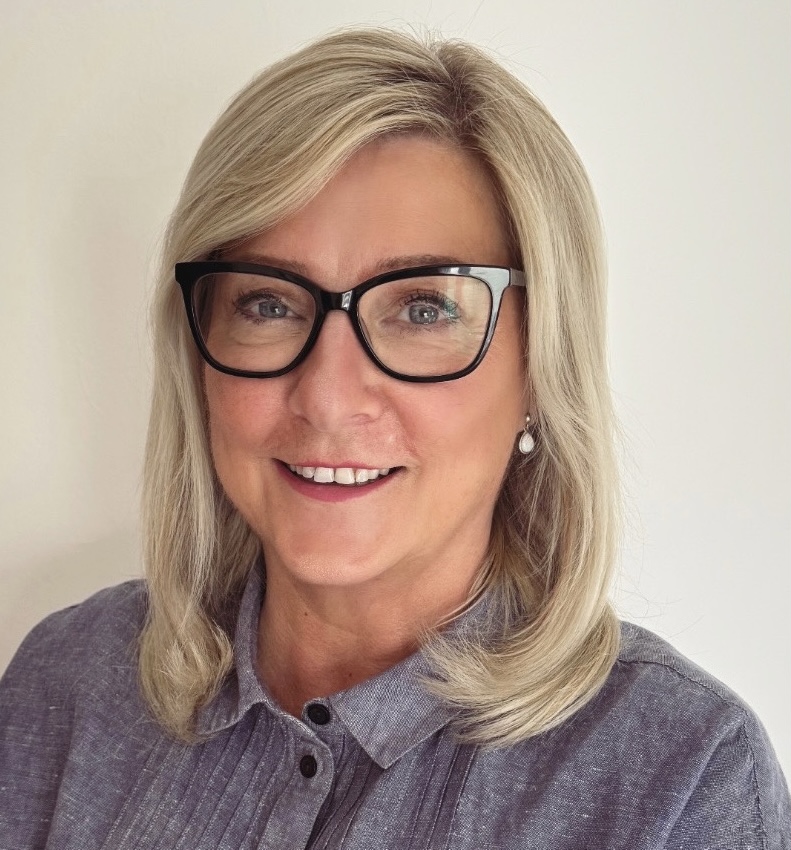
Dionne Field
Dionne Field is an integrative psychotherapist. She's passionate about helping clients understand themselves with greater compassion and clarity. With experience in both NHS mental health services & private practice, her work combines trauma-informed, person-centred therapy, ACT, CBT, DBT, 'parts work' & somatic therapy. Dionne believes that meaningful change happens when people feel safe, understood and empowered to reconnect with who they truly are.
Disclaimer
The information provided in this blog is intended for educational and informational purposes only and should not be considered a substitute for professional mental health advice, diagnosis, or treatment.
Whilst every effort is made to ensure the information shared is accurate and up to date, the content reflects general therapeutic knowledge and perspectives and may not be applicable to your individual circumstances.
Reading this blog does not create a therapeutic relationship between you and Dionne Field Therapy. If you are currently experiencing emotional distress, mental health difficulties, or require support specific to your situation, please seek advice from a qualified healthcare professional or mental health practitioner.
If you are in crisis, experiencing thoughts of self-harm, or feel unable to keep yourself safe, please contact your GP, NHS 111, emergency services, or an appropriate crisis support service immediately.
Any external links provided are for convenience and informational purposes only. Dionne Field Therapy is not responsible for the content, accuracy, or availability of third-party websites.
By using this website and blog, you acknowledge and accept this disclaimer.
Leave a Reply