

What is Online Trauma Therapy and Is It Effective?
Making the decision to seek support for trauma is a profound act of self-care. But what does that support look like when it happens through a screen? Online trauma therapy is a professional, secure, and confidential form of psychotherapy delivered by a qualified therapist via video call. It is not simply talking about the past; it is a structured, evidence-based process designed to help you heal from the psychological and physiological impact of overwhelming events.
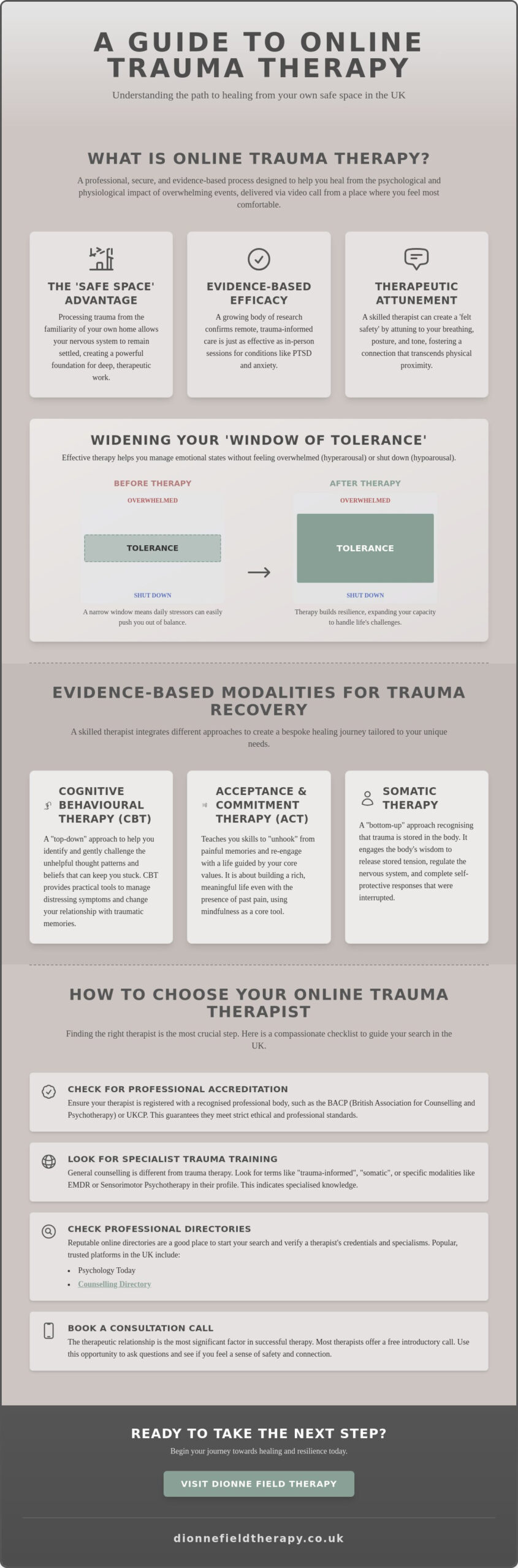
- The “Safe Space” Advantage: For many, the clinical environment of a therapist’s office can inadvertently trigger a sense of high alert or a “threat response.” Processing trauma from the safety and familiarity of your own home allows your nervous system to remain more settled, creating a powerful foundation for deep, therapeutic work.
- Evidence-Based Efficacy: A growing body of research confirms that remote, trauma-informed care can be just as effective as in-person sessions for conditions like PTSD, anxiety, and C-PTSD. The core components of healing—safety, trust, and connection—can be skillfully cultivated through a screen.
- The “Window of Tolerance”: Effective trauma therapy helps you widen your Window of Tolerance—your capacity to manage emotional states without feeling overwhelmed or shut down. An online setting allows your therapist to support you whilst you are in your own environment, helping you build resilience that translates directly into your daily life.
The Science of Remote Healing
You might wonder, can a therapist truly connect with me through a screen? The answer lies in the science of attunement. The therapeutic alliance, the single most significant factor in successful therapy outcomes, is built on a therapist’s ability to be present, listen deeply, and respond with empathy. This connection transcends physical proximity. A skilled online therapist is trained to pick up on subtle shifts in your breathing, posture, and tone of voice, creating a sense of “felt safety” that allows your nervous system to relax and engage in the healing process.
Research continues to support the use of video-based Cognitive Behavioural Therapy (CBT) and somatic interventions for adults across the UK, demonstrating that the essential ingredients of recovery are not lost in a digital format. The key is co-creating a secure therapeutic container, even when miles apart.
Online vs. In-Person: Making the Right Choice
The choice between online and in-person therapy is a deeply personal one. Face-to-face work offers a unique kind of intimacy and co-regulation that some people find essential. However, online therapy provides unparalleled accessibility, convenience, and comfort. It can be particularly beneficial for individuals with social anxiety, mobility challenges, or those living in remote areas without access to specialist trauma therapists. It removes the stress of travel, waiting rooms, and navigating unfamiliar spaces, allowing you to focus all your energy on your recovery.
If you are weighing your options, it can be helpful to explore the nuances of each approach. You can learn more by reading our guide on choosing between online and face-to-face therapy.
Evidence-Based Modalities for Trauma Recovery
Trauma is complex, affecting our thoughts, feelings, and bodies. Because of this, a “one-size-fits-all” approach is rarely effective. The most robust path to healing often involves an integrated, multi-modal approach that addresses the whole person. Rather than focusing on a single technique, a skilled trauma therapist will draw from different modalities to create a bespoke journey tailored to your unique needs.
- Cognitive Behavioural Therapy (CBT): This approach helps you identify and gently challenge the unhelpful thought patterns and beliefs that can keep you stuck in the past. It provides practical tools to manage distressing symptoms and change your relationship with traumatic memories.
- Acceptance and Commitment Therapy (ACT): ACT doesn’t try to eliminate painful memories. Instead, it teaches you skills to “unhook” from them, reduce their impact, and re-engage with a life guided by your core values. It is about building a rich and meaningful life, even with the presence of past pain.
- Somatic Therapy: Trauma isn’t just in your head; it’s stored in your body. Somatic therapy engages the body’s wisdom through “bottom-up” processing, helping to release stored tension, regulate the nervous system, and complete self-protective responses that were interrupted during the traumatic event.
Somatic Therapy: Healing Beyond Words
The phrase “the body keeps the score” is central to modern trauma treatment. It recognises that our nervous system holds the imprint of overwhelming experiences. In an online context, a somatic therapist is highly attuned to the subtle cues your body communicates through the screen—your breath patterns, your posture, involuntary movements, and shifts in tone. They will guide you through gentle exercises to increase your awareness of bodily sensations, helping you track your own nervous system and build a greater sense of safety and regulation from within. To understand more about this body-based approach, you can explore how somatic therapy helps process past trauma.
ACT for Trauma: Finding Meaning in the Aftermath
After a traumatic experience, it can feel as though your world has shrunk. Acceptance and Commitment Therapy (ACT) provides a powerful framework for rebuilding a life of purpose and meaning. Through mindfulness practices, you learn to observe difficult thoughts and feelings without being controlled by them. The focus then shifts to clarifying what truly matters to you—your core values. These values become your compass, guiding your actions and helping you move toward a future that is not defined by your past. It’s a compassionate and empowering way to find your footing in the UK’s modern, often demanding, landscape.
How to Choose the Best Online Trauma Therapist in the UK
Finding the right therapist is the most crucial step in your recovery. In the digital world, it’s vital to know how to identify a qualified, ethical, and effective practitioner. Here is a compassionate checklist to guide your search for online trauma therapy in the UK.
- Check for Professional Accreditation: Ensure your therapist is registered with a reputable UK professional body like the BACP (British Association for Counselling and Psychotherapy) or the UKCP. This guarantees they have met rigorous training standards and adhere to a strict ethical code.
- Verify “Trauma-Informed” Credentials: “Trauma-informed” is more than a buzzword. Look for therapists who have undertaken specific, in-depth training in modalities like Somatic Therapy, EMDR, CBT, or ACT for trauma. Their profile should reflect a deep understanding of the nervous system.
- Inquire About Digital Security: Your privacy is paramount. Ask if the video platform they use is encrypted and GDPR-compliant. Professional therapists will use secure platforms like Zoom for Healthcare, Whereby, or Doxy.me, not standard consumer apps.
- Trust the “Initial Consultation”: The “click”—that feeling of safety and being understood—is essential. Most therapists offer a free or low-cost initial consultation. Use this time to see how you feel with them. A sense of safety often matters more than decades of experience.
- Consider a UK-Based Therapist: Even for online therapy, choosing a therapist based in the UK ensures they understand the local cultural context, are governed by UK laws and ethical bodies, and are familiar with the NHS landscape should you ever need to coordinate care.
Professional Standards and Ethics
What does BACP accreditation truly mean for you? It means your therapist is committed to ongoing professional development, receives regular clinical supervision (where they discuss their work with a more senior practitioner to ensure best practice), and is accountable to an ethical framework that puts your safety and well-being first. It is a mark of quality and a promise of professionalism. You can often verify a therapist’s credentials on directories that require proof of membership.
Practical Questions for Your Potential Therapist
During your initial consultation, don’t be afraid to ask direct questions. This is your time to gather information and assess if they are the right fit for you. Consider asking:
- What is your protocol if we get disconnected during a difficult moment in our session?
- What is your experience working with the specific issues I am facing (e.g., childhood trauma, relational abuse, a single-incident event)?
- How do you approach creating a sense of safety and connection in an online setting?
- What are your policies on session frequency, cancellations, and communication between sessions?
Preparing for Your Online Trauma Therapy Sessions
To get the most out of your online therapy, it helps to create a supportive environment for yourself. This isn’t just about technology; it’s about intentionally creating a space for healing to unfold. A little preparation can make a world of difference.
- Technical Setup: Ensure you have a stable internet connection. Using headphones is highly recommended as it enhances privacy, minimises distractions, and can create a more intimate and contained therapeutic space.
- The “Therapy Nest”: Dedicate a specific area for your sessions. Make it comfortable and grounding. This could involve having a soft blanket, a comfortable cushion, a warm drink, or sensory objects nearby that help you feel present and safe.
- Confidentiality at Home: If you live with others, consider how you can protect your privacy. This might mean scheduling sessions when you are alone, using a white noise machine outside your door, or clearly communicating your need for an uninterrupted hour to family or housemates.
- Transition Time: This is vital. Avoid scheduling your session right before a demanding work meeting or a busy family activity. Give yourself a 15-minute “buffer” before and after the session to ground yourself, reflect, and transition gently back into your day.
The Importance of Physical Grounding
When discussing difficult material, it’s easy to feel disconnected or “floaty.” Physical grounding helps you stay present in your body and in the room. Before your session, you might place a weighted cushion on your lap or have a familiar scent like an essential oil nearby. Your therapist can also guide you through simple grounding exercises, but having these tools to hand empowers you to co-regulate your nervous system during the session. Remember to turn off notifications on your phone and computer to create a truly protected space.
Establishing a Post-Session Ritual
Jumping straight back into your to-do list after a trauma therapy session can be jarring for your nervous system. The work of therapy continues to integrate long after the hour is over. Establishing a gentle post-session ritual honours this process. It could be as simple as five minutes of quiet journaling, a short, mindful walk, listening to a calming piece of music, or simply stretching your body. This ritual helps your mind and body process the session’s work and reinforces the message that this time is sacred. If you’re new to therapy, you might find it helpful to read about what to expect in your first session.
Trauma-Informed Care with Dionne Field Therapy
At Dionne Field Therapy, we offer a compassionate, expert-led approach to trauma recovery for individuals across the UK. We believe that effective online therapy is not just about talking via video; it is about co-creating a secure, somatic-focused digital container that respects the rhythm of your body and your unique path to healing.
- A Bespoke Healing Journey: By integrating Somatic, CBT, and ACT approaches, we provide a holistic and personalised therapeutic experience that addresses your thoughts, emotions, and physical sensations.
- No Waiting Lists: As a private practice, we can offer timely support without the long waiting lists often associated with public services. You will work with a consistent, familiar therapist who is dedicated to your journey.
- UK-Wide Access: Whilst based in Cheshire, our secure online platform allows us to support clients across the United Kingdom, from cities to rural communities, providing specialist care wherever you are.
A Compassionate Partner in Your Recovery
Dionne Field’s philosophy is rooted in “quiet strength” and “unconditional support.” A trauma-informed perspective fundamentally changes the therapeutic question from “What is wrong with you?” to the far more compassionate and useful question, “What happened to you?” This shift acknowledges that your responses are normal adaptations to abnormal events. It creates a non-judgmental space where true healing can begin. You can see this compassionate approach reflected in our posts and conversations on Instagram, or learn more about Dionne’s professional background on Psychology Today.
Taking the First Step Toward Healing
Reaching out is often the hardest part, but it is the first step on a path toward reclaiming your life from the weight of the past. We are committed to providing ethical, professional, and deeply human care that honours your courage. If you feel ready to explore how online trauma therapy could support you, we invite you to get in touch.
Contact Dionne Field Therapy to begin your journey toward recovery.
Frequently Asked Questions About Online Trauma Therapy
Is online trauma therapy as effective as meeting in person?
Yes, for many people, it is. Research has consistently shown that online therapy delivered via video is as effective as in-person therapy for a wide range of issues, including PTSD and anxiety. The most important factor for success is the quality of the therapeutic relationship, which can be built just as strongly through a screen with a skilled and attuned therapist.
Will I have to talk about exactly what happened during the trauma?
No, you do not have to share any details you are not comfortable with. Modern, trauma-informed therapy, particularly approaches like Somatic Therapy, focuses more on processing the physiological and emotional residue of the trauma rather than on a narrative retelling of the event. The principle is “less is more.” Your therapist will work with you at your pace, always prioritising your sense of safety.
How do I know if a trauma therapist is properly qualified in the UK?
Look for their registration with a major UK professional body, such as the BACP (British Association for Counselling and Psychotherapy) or the UKCP. This is your guarantee that they have completed accredited training and adhere to a strict code of ethics. You should also look for evidence of post-qualification training specifically in trauma modalities.
What happens if my internet connection fails during a session?
This is a common concern, and every professional online therapist will have a clear backup plan. Typically, this involves attempting to reconnect for a few minutes, and if that fails, the therapist will call you on the phone number you have provided to either continue the session or reschedule. This protocol will be discussed and agreed upon in your first session.
Is online therapy secure and private?
Yes. Reputable therapists use video platforms that are GDPR-compliant and feature end-to-end encryption. This ensures that your sessions are confidential and secure. It is also important for you to take steps to ensure privacy on your end, such as using a private room and a secure internet connection.
How many sessions of trauma therapy will I need?
The duration of therapy varies significantly from person to person. It depends on the nature of the trauma, your personal history, and your therapeutic goals. Some people find relief from specific symptoms in a few months, whilst those with more complex or developmental trauma may benefit from longer-term work. This is something you will discuss collaboratively with your therapist.
Can I access online trauma therapy if I am currently in a crisis?
Online therapy is generally not suitable for individuals in an acute crisis or who are at immediate risk of harming themselves or others. If you are in crisis, please contact your GP, call the NHS on 111, contact the Samaritans on 116 123, or go to your nearest A&E department for immediate support.
Do you offer online trauma therapy for childhood or complex trauma (C-PTSD)?
Yes. The integrated approach combining Somatic, CBT, and ACT modalities is particularly well-suited to working with the multifaceted nature of childhood and complex trauma. This approach addresses the impact on the nervous system, core beliefs, and day-to-day functioning in a gentle, phased, and safe manner.

Article by
Dionne Field
Dionne Field is an integrative psychotherapist. She's passionate about helping clients understand themselves with greater compassion and clarity. With experience in both NHS mental health services & private practice, her work combines trauma-informed, person-centred therapy, ACT, CBT, DBT, 'parts work' & somatic therapy. Dionne believes that meaningful change happens when people feel safe, understood and empowered to reconnect with who they truly are.
Disclaimer
The information provided in this blog is intended for educational and informational purposes only and should not be considered a substitute for professional mental health advice, diagnosis, or treatment.
Whilst every effort is made to ensure the information shared is accurate and up to date, the content reflects general therapeutic knowledge and perspectives and may not be applicable to your individual circumstances.
Reading this blog does not create a therapeutic relationship between you and Dionne Field Therapy. If you are currently experiencing emotional distress, mental health difficulties, or require support specific to your situation, please seek advice from a qualified healthcare professional or mental health practitioner.
If you are in crisis, experiencing thoughts of self-harm, or feel unable to keep yourself safe, please contact your GP, NHS 111, emergency services, or an appropriate crisis support service immediately.
Any external links provided are for convenience and informational purposes only. Dionne Field Therapy is not responsible for the content, accuracy, or availability of third-party websites.
By using this website and blog, you acknowledge and accept this disclaimer.
Leave a Reply